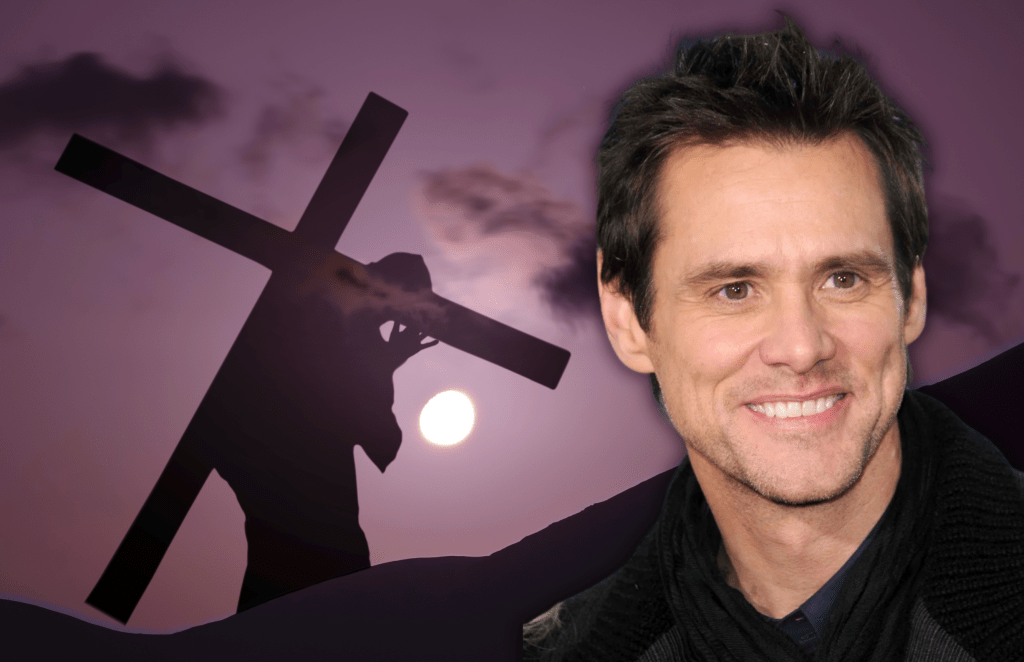
In a newly resurfaced video, Actor and comedian Jim Carrey provides inspiration regarding the salvific nature of suffering, which is a central aspect of Catholic Church teaching.
Carrey is known for his roles in countless movies, including, “Bruce Almighty,” “Liar, Liar,” “The Mask,” and “Batman Forever,” to name a few.
Subscribe to Hollywood Catholic to receive our content in your inbox:
“Suffering leads to salvation. In fact, it’s the only way,” Carrey says in the resurfaced address to Homeboy Industries, an organization that “improves the lives of former gang members .”
“We have to, somehow, accept, not deny, but feel our suffering and feel our losses,” he continues. “And then, we make one of two decisions: we either decide to go through the gate of resentment, which leads to vengeance, which leads to self-harm, which leads to harm to others. Or, we go through the gate of forgiveness, which leads to grace.”
“Just as Christ did on the Cross, he suffered terribly and he was broken by it. And the decision was to look upon the people who caused that suffering…with compassion and with forgiveness. And that’s what opens the gates of Heaven for all of us.”
Watch the Jim Carrey video below:
Jim Carrey was raised in the Catholic Church, however, it is unclear what religion he currently practices.
“I’m a Buddhist, I’m a Muslim, I’m a Christian. I’m whatever you want me to be. It all comes down to the same thing,” Carrey said in a 2004 interview with 60 minutes.
Why Does God Allow Suffering?
The Catholic Church teaches suffering is a powerful means to salvation – for ourselves and others.
What the Catholic Church Teaches About Redemptive Suffering
According to Catholic Church teaching, suffering is not meaningless but can be a means of spiritual growth, purification, and participation in Christ’s sacrifice.
The Catechism of the Catholic Church (CCC) says that “by his passion and death on the cross Christ has given a new meaning to suffering: it can henceforth configure us to him and unite us with his redemptive Passion” (CCC 1505).
The Church bases this teaching heavily on Scripture. For example, Colossians 1:24, where St. Paul writes, “I rejoice in my sufferings for your sake, and in my flesh I am filling up what is lacking in the afflictions of Christ on behalf of his body, which is the Church.”





Leave a comment